

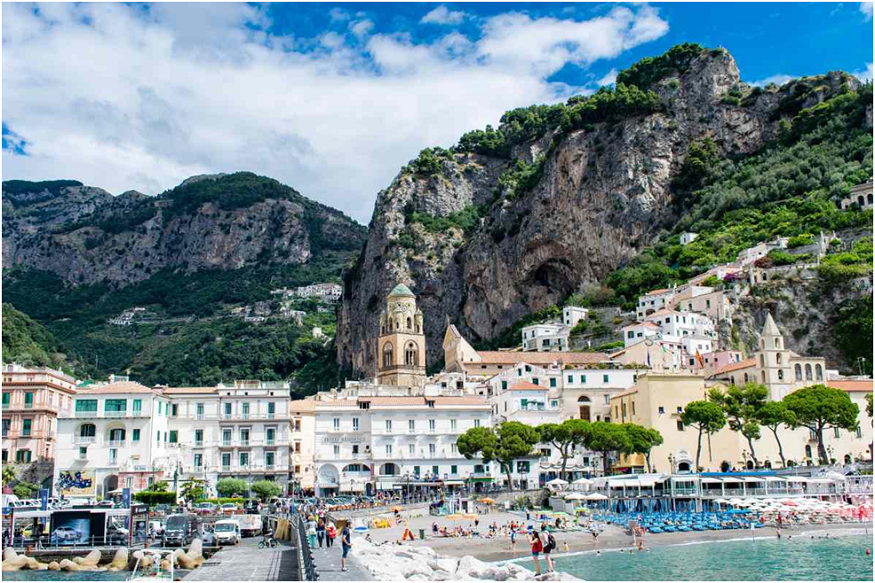
The expression la dolce vita—literally “the sweet life”—has become a cultural shorthand for the Italian ability to transform everyday existence into an aesthetic and sensory experience. Nowhere is this ethos more visible than along the Italian coastline, where small towns combine historical depth, maritime landscapes, and a refined rhythm of life. Across the Mediterranean—from Liguria in the north to Sicily in the south—coastal settlements have evolved into environments where architecture, gastronomy, and scenery converge in a distinctly Italian form of elegance.
These towns are rarely defined solely by beaches. Instead, they are places where narrow streets reveal centuries of mercantile history, where piazzas remain the social center of civic life, and where terraces overlooking the sea encourage an unhurried contemplation of landscape. Italian coastal towns thus represent a synthesis of cultural heritage and natural beauty, sustaining traditions while adapting to contemporary tourism.
The Amalfi Coast
Among Italy’s coastal regions, the Amalfi Coast has become perhaps the most iconic embodiment of Mediterranean romanticism. A UNESCO World Heritage landscape, this stretch of coastline is celebrated for its dramatic cliffs and towns arranged in cascading layers above the Tyrrhenian Sea.
The town of Positano epitomizes the visual language of the Amalfi Coast. Terraced houses painted in pastel tones descend toward narrow beaches, creating a vertical urban structure that blends seamlessly with the surrounding cliffs. The town’s serpentine streets host family-owned boutiques, small cafés, and restaurants specializing in seafood and regional dishes flavored with the lemons for which the area is famous.
Nearby settlements further illustrate the cultural richness of the region. Ravello, perched high above the shoreline, offers panoramic views from historic villas such as Villa Cimbrone, while small towns like Atrani preserve traditional urban forms almost unchanged by modern development.
Together, these towns demonstrate how landscape and architecture have coevolved to produce one of the most recognizable coastal environments in Europe.
Read More: Trip into the Himalayas with a Nepal Trekking Company for Everest and
Cinque Terre
Further north, the villages of the Cinque Terre represent a different interpretation of Italian coastal life. Situated along the rugged Ligurian coastline, the five historic settlements—Riomaggiore, Manarola, Corniglia, Vernazza, and Monterosso al Mare—developed as fishing communities connected by trails carved into the cliffs.
Riomaggiore, the southernmost village, retains a historic character marked by tall, narrow houses rising from a small harbor. Vineyards cling to the surrounding slopes, producing local wines that have long formed part of the region’s economy.
Vernazza, often considered the most picturesque of the five, centers around a natural harbor and a compact piazza where fishing boats still arrive each morning. The absence of automobile traffic and the preservation of traditional architecture reinforce the sense that the village remains anchored in its maritime past.
The Cinque Terre thus illustrates a coastal culture shaped by necessity: steep terrain required ingenuity in both architecture and agriculture, producing landscapes that now appear almost theatrical in their beauty.
Taormina
At the southern edge of the Italian peninsula, the Sicilian town of Taormina offers another interpretation of coastal elegance. Perched on a terrace overlooking the Ionian Sea, the town has long attracted travelers drawn by its combination of classical ruins, dramatic scenery, and cosmopolitan atmosphere. Visitors encounter ancient Greek and Roman influences alongside medieval streets and nineteenth-century villas.
Read More: Nepal’s Iconic Treks: Everest and Annapurna Combined
Taormina’s position between the sea and Mount Etna creates a landscape of unusual visual contrast, and its historic Greek Theatre remains one of the most celebrated cultural sites in the Mediterranean. The town’s lively promenades, boutiques, and cafés evoke a refined leisure culture that has defined the destination for generations. Travel guides often note that the blend of beaches, scenic viewpoints, and historic architecture allows visitors to experience a quintessential sense of la dolce vita.
For travelers seeking to remain within the historic center while enjoying contemporary comfort, accommodations such as the refined retreat described at https://www.vretreats.com/en/luxury-hotel-taormina/ integrate modern hospitality into the town’s architectural heritage without disrupting its historic atmosphere.
Coastal Towns as Living Cultural Landscapes
Italian coastal towns endure not merely because of their scenic appeal but because they continue to function as living cultural landscapes. Fishing traditions persist alongside tourism economies, historic architecture coexists with modern hospitality, and culinary practices remain deeply tied to regional ingredients and maritime geography.
Ultimately, the enduring fascination with these towns lies in their capacity to embody a distinctive Mediterranean philosophy of life. Whether on the cliffs of the Amalfi Coast, the terraced vineyards of the Cinque Terre, or the panoramic terraces of Sicily, the Italian coast continues to demonstrate how landscape, culture, and everyday ritual can merge into a coherent expression of la dolce vita.